Shkulev Holding
Design Task Assignment
How I automated the assignment of editorial work in the design department
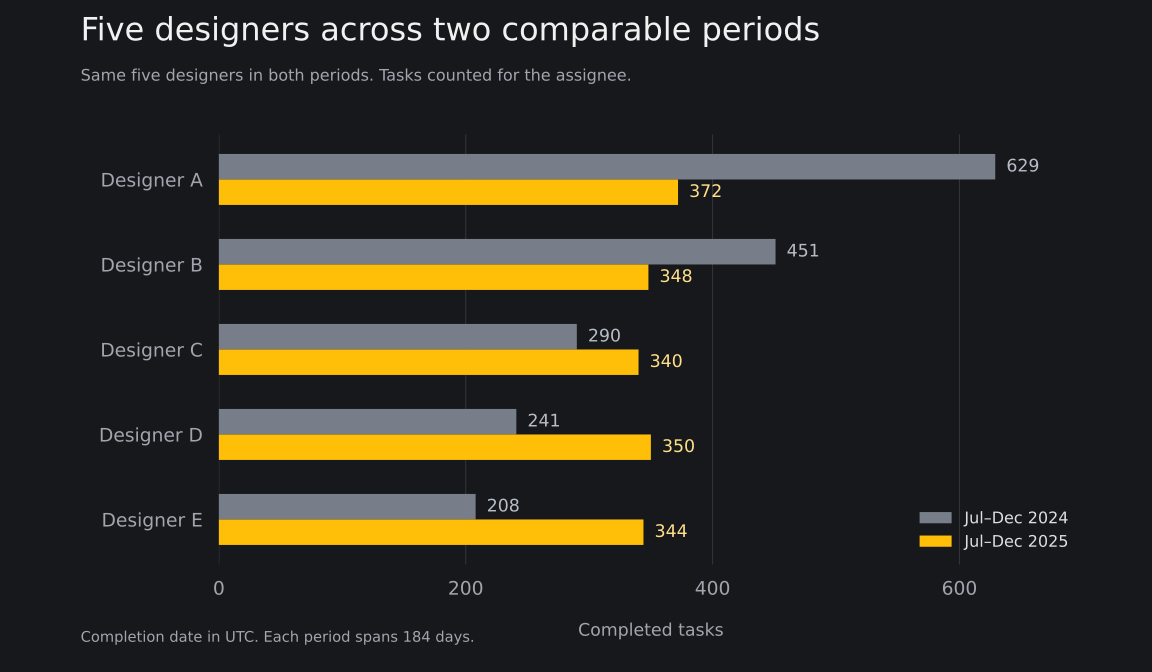
Completed task counts became more even across five designers
208–629
tasks per designer · July to December 2024
340–372
tasks per designer · July to December 2025
I compared two six-month periods for the same five designers. The figures count completed tasks. They do not separately measure effort, quality, or how much the system contributed to the change.
Replace manual pickup from a shared queue
Editorial teams put tasks in a shared Kaiten column, and designers picked up the cards themselves. I designed and built a service that checks designer availability and workload, assigns the card in Kaiten, and sends the task to the designer in Telegram.
How a task reaches a designer
An editor adds a task
A card called “Article cover” appears in the shared column with a brief and supporting materials.
The queue picks a designer
The service checks the work area, working hours, and absences, then compares the workloads and work histories of available designers.
The designer receives the assignment
Kaiten shows the assignee. Telegram delivers the brief, materials, and contacts. The designer can also see the queue and how priority was determined.
Illustrative example based on the team's workflow.
I tested the rules before launch and refined them with the team
I ran a simulation to test the queue before rollout. Based on feedback, I added a separate weight for tasks pending approval so editorial response times would not block new assignments.
I added a temporary priority adjustment for designers returning from leave. The team lead handles exceptions.
Completed tasks by designer